Introduction
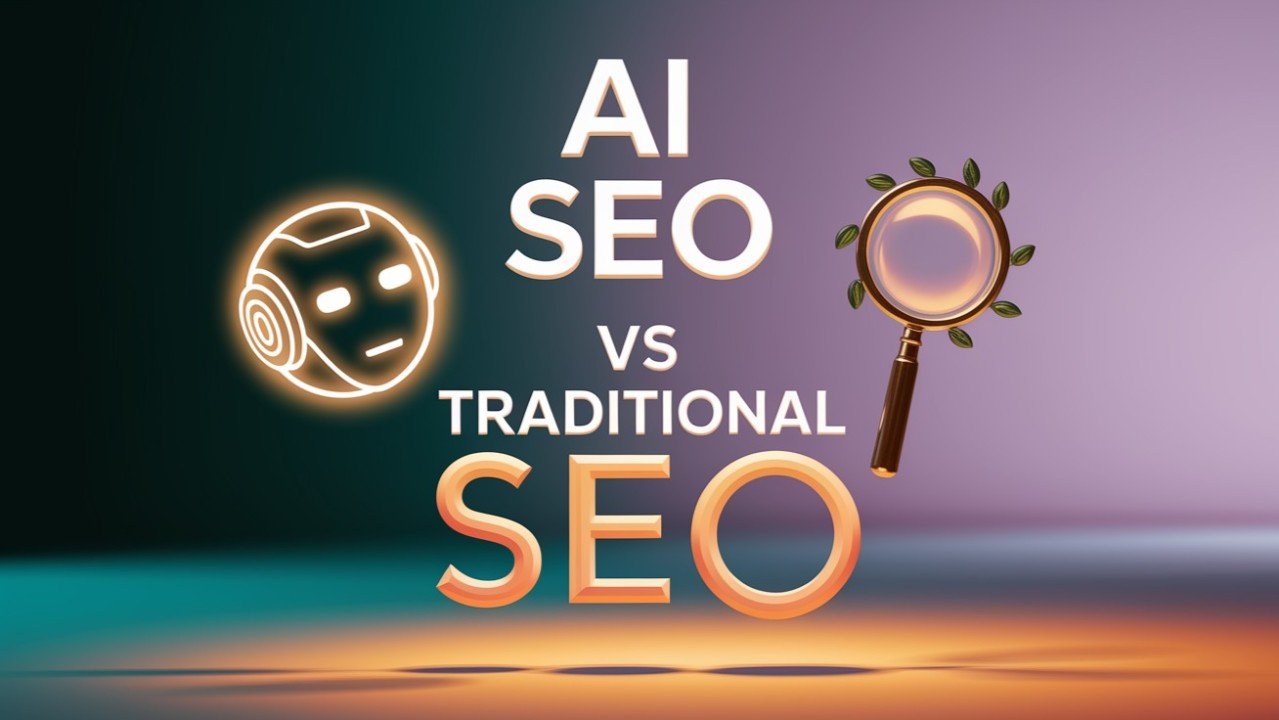
Search engine optimization has changed significantly over the past decade. What once depended heavily on manual keyword placement and backlink building has now evolved into a smarter, data-driven ecosystem powered by artificial intelligence. Businesses, content creators, and marketers are now asking a crucial question: AI SEO Different From Traditional SEO?
To understand this shift, we need to explore how search engines think today compared to how they worked in the past. Traditional SEO relied on fixed rules and predictable ranking factors. In contrast, AI-powered SEO uses machine learning, user behavior analysis, and predictive modeling to understand search intent more deeply.
This transformation is not just technical—it is strategic. It affects how content is created, optimized, and ranked. In this detailed guide, we will break down both approaches, compare their strengths and weaknesses, and help you understand which method is shaping the future of digital visibility.
Understanding Traditional SEO
Traditional SEO refers to the early and foundational methods used to improve a website’s ranking on search engines. It is based on clearly defined ranking signals and manual optimization techniques.
Key Elements of Traditional SEO
Traditional SEO focuses on:
- Keyword placement in titles, headings, and content
- Meta tags optimization
- Backlink building from external websites
- Exact match keyword targeting
- On-page optimization like URL structure and image alt text
Search engines used to rely heavily on these signals to determine relevance. The process was more mechanical and easier to manipulate with repetitive strategies.
How Traditional SEO Works
In traditional SEO, search engines crawl web pages and match keywords with user queries. The page with the most relevant keyword density and backlinks often ranked higher.
However, this system had limitations. It often prioritized keyword-heavy content over quality and user experience. As a result, many websites focused more on search engines than real users.
Rise of Artificial Intelligence in SEO
The digital landscape started changing when search engines began integrating artificial intelligence. This shift allowed algorithms to move beyond keyword matching and focus on meaning, intent, and context.
AI systems now analyze:
- User search behavior
- Click patterns
- Time spent on pages
- Content relevance beyond keywords
- Semantic relationships between words
This evolution marks the beginning of modern SEO strategies, where intelligence replaces manual guesswork.
AI SEO Different From Traditional SEO in Core Approach
One of the most important distinctions in modern digital marketing is understanding how AI SEO Different From Traditional SEO in its core approach.
Traditional SEO focuses on rules and repetition. AI SEO focuses on learning and adaptation. Instead of relying solely on fixed keywords, AI SEO understands what users actually mean when they search.
For example, if someone searches for “best phone for photography,” traditional SEO might focus on pages containing that exact phrase. AI SEO, however, understands related concepts like camera quality, sensor performance, and image processing.
This makes AI SEO more flexible, accurate, and user-focused.
How AI SEO Works
AI SEO uses advanced technologies such as machine learning and natural language processing (NLP). These technologies help search engines understand human language in a more natural way.
Key Functions of AI SEO
- Interpreting search intent
- Understanding synonyms and context
- Predicting user behavior
- Ranking content based on engagement signals
- Identifying content quality and depth
AI SEO continuously learns from user interactions, which means ranking systems evolve over time.
Traditional SEO vs AI SEO: Key Differences
To fully understand the shift, we must compare both systems side by side.
1. Keyword Usage
Traditional SEO depends heavily on exact keyword matches. AI SEO focuses on semantic relevance and meaning.
2. Content Optimization
Traditional SEO emphasizes keyword density. AI SEO prioritizes content quality and topic depth.
3. Ranking Factors
Traditional SEO uses fixed ranking signals. AI SEO uses dynamic, learning-based signals.
4. User Intent
Traditional SEO often ignores intent. AI SEO places intent at the center of ranking decisions.
5. Content Evaluation
Traditional SEO evaluates structure and keywords. AI SEO evaluates engagement, readability, and satisfaction.
Again, this clearly shows how AI SEO Different From Traditional SEO in both strategy and execution.
Role of Machine Learning in Modern SEO
Machine learning is the backbone of AI SEO systems. It allows search engines to improve continuously without manual updates.
How Machine Learning Helps SEO
- Identifies spam and low-quality content
- Understands content relevance at scale
- Adjusts rankings based on user feedback
- Detects patterns in search behavior
This means websites are no longer ranked just once—they are continuously evaluated.
Importance of User Experience in AI SEO
User experience has become a major ranking factor in modern SEO systems. Search engines now measure how users interact with a website.
UX Signals That Matter
- Page loading speed
- Mobile responsiveness
- Content readability
- Time spent on page
- Bounce rate
Websites that provide better experiences tend to perform better in search rankings.
Content Quality in AI SEO Era
Content quality is now more important than ever. AI systems can detect whether content is meaningful or just keyword-stuffed.
What High-Quality Content Includes
- Clear and structured information
- Natural language flow
- Depth of topic coverage
- Helpful insights for users
- Updated and accurate data
This is another reason why AI SEO Different From Traditional SEO in execution. Quality now outweighs quantity.
Semantic Search and Context Understanding
Semantic search allows search engines to understand the meaning behind words rather than just matching text.
For example:
- “Apple” could mean a fruit or a technology company
- AI determines meaning based on context
This capability improves search accuracy and user satisfaction significantly.
Role of AI Tools in SEO Strategy
Modern SEO professionals now use AI-powered tools to improve performance.
Common Uses of AI Tools
- Keyword research automation
- Content generation support
- Competitor analysis
- SEO performance tracking
- Topic clustering
These tools reduce manual effort and increase efficiency.
Benefits of AI SEO
AI SEO offers several advantages over traditional methods.
1. Better Search Accuracy
Search engines deliver more relevant results to users.
2. Improved Content Ranking
High-quality content gets better visibility.
3. Faster Optimization
AI tools speed up analysis and decision-making.
4. Smarter Keyword Targeting
Focus shifts from exact keywords to topic relevance.
5. Enhanced User Satisfaction
Users find more useful and engaging content.
Limitations of Traditional SEO
Although traditional SEO is still useful, it has limitations in the modern digital world.
Major Limitations
- Over-reliance on keywords
- Less focus on user intent
- Manual and time-consuming processes
- Vulnerability to outdated tactics
These limitations have encouraged the shift toward AI-powered strategies.
Future of AI in SEO
The future of SEO is deeply connected to artificial intelligence. Search engines will continue to evolve and become even more intelligent.
Future Trends
- Voice search optimization
- AI-generated search summaries
- Predictive search results
- Personalized ranking systems
- Real-time content evaluation
Businesses that adapt early will have a competitive advantage.
How Businesses Should Adapt
To stay competitive in this evolving landscape, businesses must update their SEO strategies.
Recommended Actions
- Focus on user intent instead of just keywords
- Create in-depth and valuable content
- Use AI tools for optimization
- Improve website performance and UX
- Stay updated with algorithm changes
Understanding that AI SEO Different From Traditional SEO is the first step toward building a future-ready strategy.
Common Misconceptions About AI SEO
Many people misunderstand AI SEO and assume it replaces human effort completely. This is not true.
Misconceptions
- AI SEO eliminates human writers
- Keywords are no longer important
- SEO is fully automated
- Traditional SEO is useless
In reality, AI enhances human strategy rather than replacing it.
Practical SEO Strategy in AI Era
A balanced approach is the most effective strategy today.
Best Practices
- Combine keyword research with intent analysis
- Write for humans first, search engines second
- Use AI tools for insights, not full automation
- Focus on topic authority
- Continuously update content
This hybrid approach delivers strong long-term results.
Final Thoughts
The digital marketing landscape is undergoing a major transformation. The shift from manual optimization techniques to intelligent systems has changed how websites are ranked and discovered.
Understanding that AI SEO Different From Traditional SEO is essential for anyone involved in digital marketing, blogging, or online business. While traditional SEO laid the foundation, AI SEO is building the future.