Introduction
The digital world in 2026 is evolving at a speed never seen before. Search engines are no longer just simple keyword matchers; they are intelligent systems powered by machine learning, natural language understanding, and predictive analytics. In this environment, businesses must adapt or risk losing visibility.
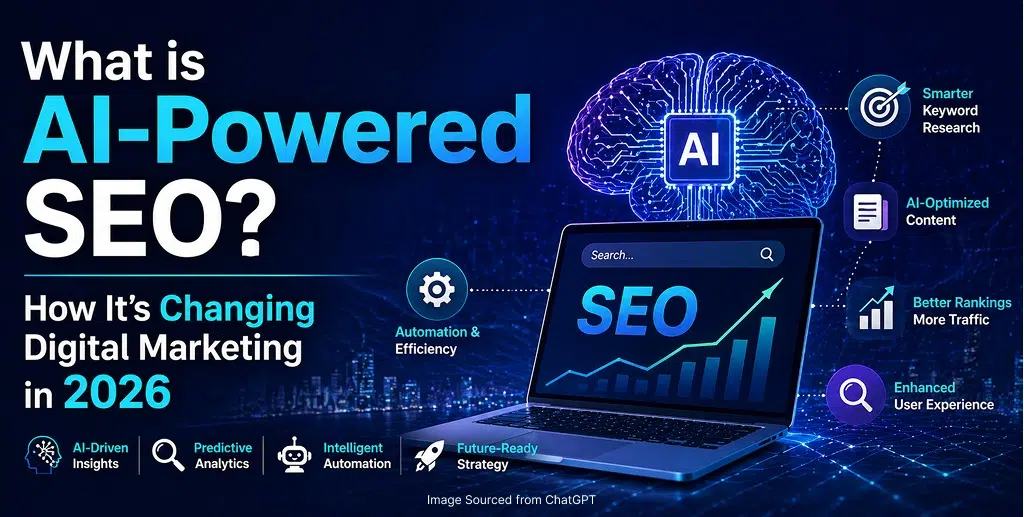
At the center of this transformation is AI Changing SEO And Digital Marketing Strategies. Artificial intelligence is not just improving tools—it is reshaping how search rankings are determined, how content is created, and how audiences interact with brands online.
This article explores the complete transformation of SEO and digital marketing driven by AI, the new strategies businesses must adopt, and how the future of online growth is being redefined.
The Rise of AI in Digital Marketing Ecosystem
Over the last few years, artificial intelligence has moved from experimental technology to a core business driver. Marketing teams now rely on AI for:
- Content generation and optimization
- Keyword clustering and search intent analysis
- Customer behavior prediction
- Automated ad targeting
- Real-time SEO performance tracking
This shift has made traditional manual SEO methods less effective. Search engines now use AI-based algorithms that evaluate context, relevance, and user satisfaction instead of simple keyword repetition.
As a result, AI Changing SEO And Digital Marketing Strategies has become the foundation of modern online success.
How Search Engines Have Become AI-Driven
Search engines in 2026 are powered by advanced machine learning models that understand:
- User intent behind a query
- Context of words in natural language
- Search history and behavioral signals
- Content quality and expertise
- Engagement patterns like click-through rates and dwell time
Instead of ranking pages based only on keywords, AI evaluates whether content truly solves a user’s problem.
This means websites must now focus on meaning, not just optimization tricks.
Evolution of SEO in the AI Era
SEO has gone through several phases:
1. Traditional SEO Era
Focused on keyword density, backlinks, and meta tags.
2. Content Marketing Era
Focused on blogs, long-form content, and storytelling.
3. AI SEO Era (Current)
Driven by automation, predictive analytics, and intent-based ranking.
Today, AI Changing SEO And Digital Marketing Strategies has shifted SEO from mechanical optimization to intelligent content engineering.
Search engines now reward:
- Semantic relevance
- High-quality user experience
- Topical authority
- Contextual depth
- Engagement signals
AI-Powered Keyword Research Revolution
Keyword research has changed drastically. Instead of manually searching terms, AI tools now:
- Group keywords into topic clusters
- Predict rising search trends
- Identify user intent categories
- Suggest long-tail keyword opportunities
- Analyze competitor gaps
For example, instead of targeting a single keyword, marketers now build entire topic ecosystems.
This ensures better visibility and stronger authority in search results.
Content Creation in the Age of AI
Content creation has been one of the most affected areas. AI tools now assist in:
- Writing blog drafts
- Generating product descriptions
- Creating ad copy variations
- Optimizing readability
- Suggesting headings and structure
However, human input is still essential. Search engines prioritize content that demonstrates:
- Experience
- Expertise
- Trustworthiness
- Original insights
This is why businesses combine AI efficiency with human creativity.
The result is a hybrid model where AI Changing SEO And Digital Marketing Strategies improves speed without reducing authenticity.
Role of AI in User Experience Optimization
User experience is now a ranking factor stronger than ever.
AI systems analyze:
- Page loading speed
- Mobile responsiveness
- Navigation structure
- Interaction patterns
- Bounce rates
Websites that provide smoother experiences rank higher.
AI tools also predict user behavior, allowing marketers to design pages that match expectations before users even interact with them.
Predictive SEO and Future Ranking Signals
One of the most powerful innovations is predictive SEO.
AI can now forecast:
- Which keywords will trend next month
- Which content topics will gain traction
- Which pages may lose ranking
- How algorithm updates may affect websites
This predictive capability allows businesses to stay ahead instead of reacting late.
In this way, AI Changing SEO And Digital Marketing Strategies is not just reactive—it is proactive.
AI in Digital Marketing Strategy Development
Digital marketing is no longer about isolated campaigns. AI integrates all channels into a unified system:
- SEO
- Social media marketing
- Email campaigns
- Paid advertisements
- Content marketing
AI analyzes data from all channels to create optimized marketing strategies.
This leads to:
- Better audience targeting
- Improved conversion rates
- Lower marketing costs
- Smarter budget allocation
Automation in Marketing Workflows
Automation is another major transformation. AI now handles repetitive tasks such as:
- Scheduling posts
- Sending email campaigns
- Monitoring SEO performance
- Generating reports
- A/B testing ads
This allows marketing teams to focus on creativity and strategy instead of manual execution.
As automation expands, AI Changing SEO And Digital Marketing Strategies continues to reduce workload while improving results.
Voice Search and Conversational SEO
With the rise of smart assistants and voice devices, search behavior has changed significantly.
Users now search using natural language like:
- “Best SEO strategies for small businesses in 2026”
- “How do I improve website ranking quickly?”
AI optimizes content for conversational queries by focusing on:
- Question-based content
- Natural sentence structure
- Featured snippet optimization
- Local intent targeting
This shift is reshaping how SEO content is written.
Visual and Multimodal Search Optimization
Search engines now understand images, videos, and audio content.
AI analyzes:
- Image objects and context
- Video transcripts
- Audio content meaning
- Visual search queries
Businesses must optimize all types of content, not just text.
This creates a more immersive search ecosystem where users interact through multiple formats.
AI in Link Building and Authority Growth
Link building has also evolved. Instead of manual outreach, AI tools now:
- Identify high-authority domains
- Predict link value
- Detect spammy backlinks
- Suggest outreach opportunities
- Automate email personalization
This makes link-building more strategic and data-driven.
High-quality backlinks remain important, but AI ensures they are more relevant and impactful.
Personalized Search Results and Marketing
AI has made search results highly personalized. Two users searching the same term may see different results based on:
- Location
- Search history
- Device usage
- Interests
- Behavioral patterns
Marketers must now focus on personalization strategies to reach different audience segments effectively.
This is a core element of AI Changing SEO And Digital Marketing Strategies in 2026.
Data Analytics and Decision Making
AI-powered analytics tools provide deep insights into:
- Customer journeys
- Conversion paths
- Content performance
- Engagement metrics
- Revenue attribution
Instead of guessing, marketers now make decisions based on real-time data intelligence.
This improves accuracy and reduces marketing risks.
Ethical Use of AI in Marketing
With great power comes responsibility. Ethical AI usage includes:
- Transparent content generation
- Avoiding misleading information
- Protecting user privacy
- Ensuring data security
- Maintaining human oversight
Brands that misuse AI risk losing trust and credibility.
Ethical strategies ensure long-term success in digital marketing.
Challenges in AI-Driven SEO
Despite its advantages, AI also brings challenges:
- Over-reliance on automation
- Content saturation
- Algorithm unpredictability
- Reduced originality in some cases
- Constant learning curve
Businesses must balance automation with human creativity to overcome these challenges.
Future of AI in SEO and Digital Marketing
The future points toward even deeper integration of AI in all digital processes:
- Fully automated marketing ecosystems
- Real-time SEO adjustments
- Hyper-personalized content experiences
- Advanced predictive search models
- Autonomous content optimization systems
In this evolving environment, AI Changing SEO And Digital Marketing Strategies will continue to define competitive advantage for businesses worldwide.
Conclusion
Artificial intelligence is no longer a supporting tool—it is the core engine of modern SEO and digital marketing. From keyword research to content creation, from predictive analytics to user experience optimization, AI is transforming every layer of digital growth.
Businesses that adapt to this transformation will gain stronger visibility, better engagement, and long-term success. Those who ignore it risk becoming invisible in an AI-driven search world.